
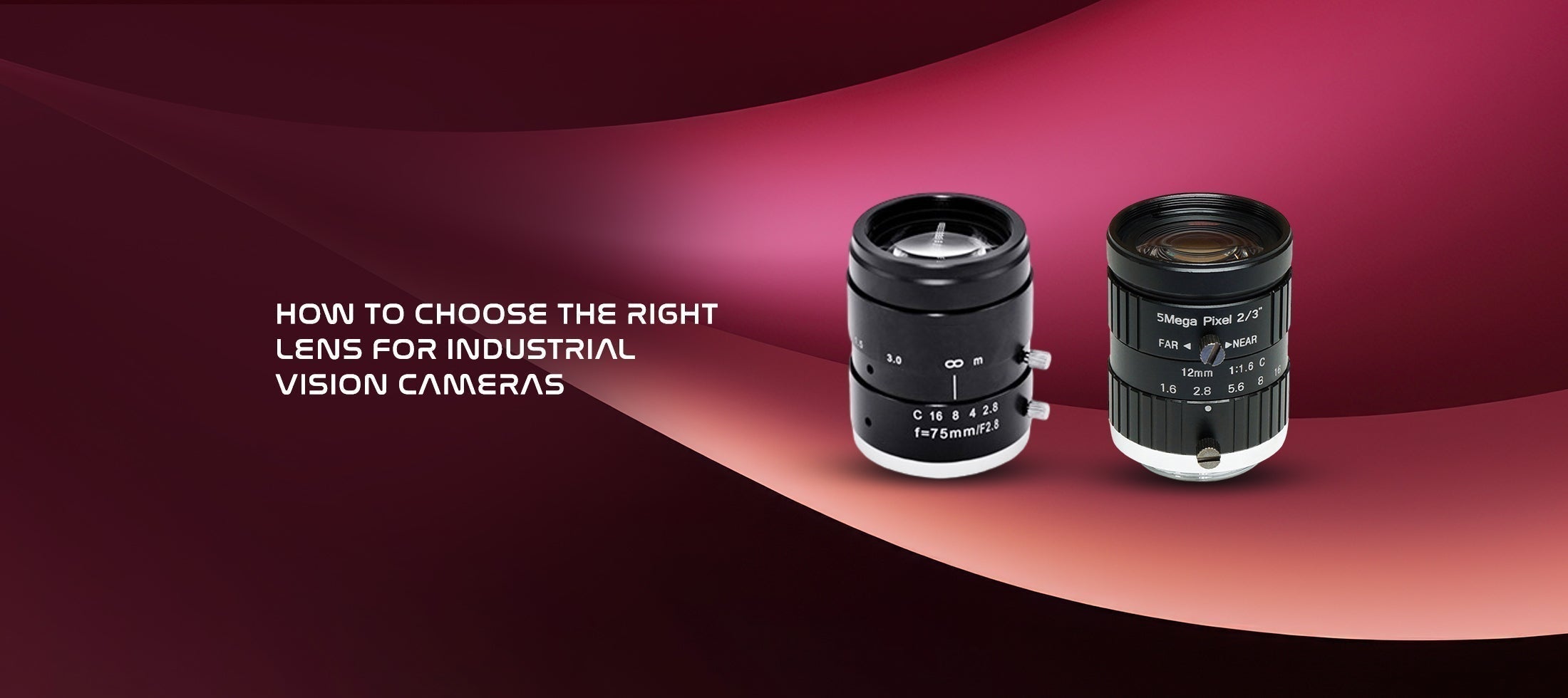
How to Choose the Right Lens for Industrial Vision Cameras
In machine vision systems, the quality of imaging is not defined by the camera alone. The lens plays a critical role in determining how accurately a system captures visual information. Selecting the right lens for industrial vision cameras is essential for achieving reliable inspection results, accurate measurements, and consistent performance in factory automation environments.
A mismatch between the lens and the application can lead to issues such as distortion, poor focus, reduced field of view, and inconsistent imaging. Understanding the key factors involved in lens selection helps ensure that machine vision systems operate efficiently and deliver accurate results.
Learn More: https://www.kyptec-automation.com/collections/machine-vision-lens
Understanding the Role of Lenses in Machine Vision Systems
Machine vision lenses are designed to focus light onto the camera sensor with precision and consistency. Unlike standard camera lenses, they are optimized for industrial applications where repeatability, low distortion, and high resolution are required.
In factory automation, lenses are used for inspection, measurement, identification, and monitoring tasks. The ability to capture sharp and distortion free images ensures that machine vision systems can detect defects, measure dimensions, and analyze components accurately.
Key Factors to Consider When Choosing a Lens
Selecting the right lens involves evaluating several technical parameters that directly impact imaging performance.
Focal Length
Focal length determines the field of view and magnification. A shorter focal length provides a wider field of view, while a longer focal length offers higher magnification. Choosing the correct focal length depends on the size of the object and the required level of detail.
Sensor Compatibility
The lens must be compatible with the camera sensor size to ensure proper image coverage. Using an incompatible lens can result in vignetting or incomplete image capture.
Working Distance
Working distance refers to the space between the lens and the object being inspected. This distance affects the field of view and must be considered when designing the system layout.
Resolution and Pixel Size
The lens should match the resolution of the camera sensor. High resolution sensors require lenses capable of resolving fine details to maintain image clarity.
Depth of Field
Depth of field determines how much of the object remains in focus. In applications where objects vary in height or position, a larger depth of field is beneficial.
Lighting Conditions
Lighting plays a crucial role in imaging. The lens must perform well under the available lighting conditions, ensuring consistent image quality.
Kyptec Automation® Machine Vision Lenses for Industrial Applications
Kyptec Automation® provides machine vision lenses designed to meet the practical requirements of industrial automation and inspection systems. With a focus on precision, consistency, and reliability, these lenses are developed to support a wide range of applications.
Built on the philosophy of designed in India and engineered for the world, Kyptec Automation® lenses are created to deliver consistent performance in real world industrial environments. The product range includes lenses suitable for various sensor sizes, focal lengths, and application requirements.
With a strong focus on application driven engineering and global supply capability, Kyptec Automation® is emerging as a fast growing provider of machine vision solutions across industries.
Applications of Machine Vision Lenses in Industry
Machine vision lenses are used in a wide range of industrial applications, including:
- Electronics manufacturing for PCB inspection and component analysis
- Automotive industry for assembly inspection and defect detection
- Packaging and printing for quality control and label verification
- Semiconductor industry for precision inspection
- Robotics and automation systems for guidance and monitoring
In each of these applications, selecting the right lens ensures accurate and reliable imaging.
Common Mistakes in Lens Selection
Choosing a lens without proper consideration of application requirements can lead to several issues:
- Incorrect field of view leading to incomplete inspection
- Poor image quality due to mismatch with sensor resolution
- Insufficient depth of field causing focus issues
- Ignoring lighting conditions resulting in inconsistent images
Avoiding these mistakes requires a clear understanding of system requirements and careful evaluation of lens specifications.
Why Correct Lens Selection Matters in Automation
The success of a machine vision system depends on the quality of the captured image. A properly selected lens ensures that the system can perform accurate inspection, reduce errors, and improve productivity.
In industrial automation, where precision and efficiency are critical, the right lens contributes to better decision making and consistent performance.
Conclusion
Choosing the right lens for industrial vision cameras is a critical step in building an effective machine vision system. By considering factors such as focal length, sensor compatibility, working distance, and resolution, it is possible to achieve accurate and reliable imaging.
Kyptec Automation® supports this process by providing machine vision lenses designed for industrial applications, combining precision imaging with practical reliability. With a focus on performance and global supply, these solutions help meet the growing demands of factory automation and machine vision systems worldwide.
Learn More: https://www.kyptec-automation.com/collections/machine-vision-lens
Share:
Top 5 Factors to Consider When Choosing Machine Vision Cables for Industrial Cameras
Top 5 Factors to Consider When Choosing Machine Vision Cables for Industrial Cameras