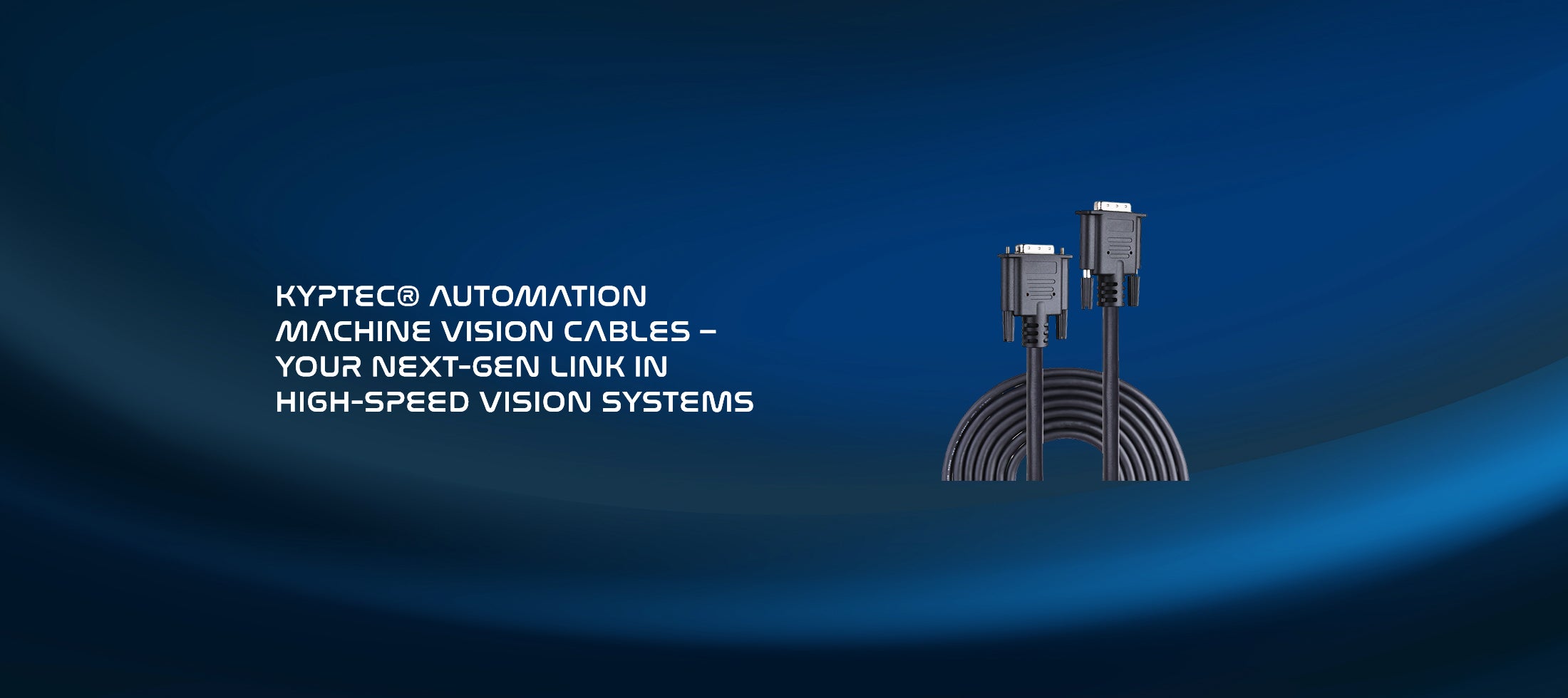
Kyptec Automation® Machine Vision Cables – Your Next Gen Link in High Speed Vision Systems
In modern industrial automation, machine vision systems are no longer limited by cameras or processing power alone. The real performance of a vision system depends on how efficiently image data is transmitted from the camera to the processing unit. This is where machine vision cables play a critical role. Often overlooked, these cables act as the backbone of high speed vision systems, ensuring stable data transfer, synchronization, and long term reliability in demanding environments.
Machine vision cables are specifically designed to handle high bandwidth image data with minimal signal loss and interference. Unlike standard cables, they are engineered with shielding, precision connectors, and industrial grade materials to maintain signal integrity even in harsh factory conditions. Reliable connectivity is essential because any disruption in data transmission can directly impact inspection accuracy, production efficiency, and system uptime.
Learn More: https://www.kyptec-automation.com/collections/machine-vision-cables
Understanding Machine Vision Cable Requirements
Machine vision applications require cables that can support high speed data transmission, low latency, and consistent performance over long distances. In industries such as electronics manufacturing, automotive inspection, packaging, and semiconductor processing, even minor delays or signal degradation can lead to inaccurate results or system failures.
High performance cables are designed to support real time image acquisition and processing. For example, GigE based systems rely on Ethernet communication, offering high speed data transfer and flexibility in system design. These systems can support long cable lengths up to 100 meters, making them suitable for large industrial setups.
At the same time, other interfaces like Camera Link and CoaXPress are used in applications where extremely high bandwidth and real time transmission are required. Camera Link cables are built with shielded twisted pair configurations to maintain signal accuracy, while CoaXPress cables support very high data rates for advanced imaging applications.
Types of Machine Vision Cables Used in Industrial Systems
Different machine vision systems require different cable types depending on the application, data speed, and environmental conditions. Some of the most commonly used cables include:
Camera Link Cables
Camera Link cables are widely used in high speed imaging applications where large volumes of image data need to be transferred in real time. These cables provide stable communication between cameras and frame grabbers and are commonly used in inspection systems requiring precise synchronization and low latency.
GigE Machine Vision Cables
GigE cables are among the most popular choices in industrial vision systems due to their flexibility and scalability. These cables typically use Cat5e or Cat6 standards and support high speed data transmission over long distances. Their ability to integrate easily into existing network infrastructure makes them ideal for multi camera systems and factory wide deployments.
RJ45 to M12 Coded Cables
RJ45 to M12 coded cables are designed for rugged industrial environments where standard connectors may not provide sufficient durability. M12 connectors offer secure locking mechanisms, resistance to vibration, and protection against dust and moisture, making them suitable for factory automation and outdoor applications.
USB3 Vision and Other Interfaces
USB3 cables are used in applications requiring high speed data transfer with plug and play functionality. They are commonly used in compact systems where shorter cable lengths are acceptable and ease of integration is important.
Role of Machine Vision Cables in Factory Automation
In factory automation, machine vision cables are not just transmission components they are critical to system stability and production continuity. These cables connect cameras, sensors, and processing units, enabling real time inspection, defect detection, and process monitoring.
In applications such as assembly line inspection, barcode reading, robotic guidance, and surface defect detection, high speed and reliable data transmission ensures that decisions are made instantly. Any delay or data loss can lead to production errors or downtime. Industrial grade cables are therefore designed to withstand continuous operation, mechanical stress, and electromagnetic interference, ensuring long term performance.
Additionally, with the rise of smart manufacturing and Industry 4.0, machine vision systems are becoming more complex, often involving multiple cameras and synchronized operations. In such setups, cable performance directly affects system scalability and integration.
Why Cable Quality Matters in Machine Vision Systems
While cameras and software often receive the most attention, the quality of machine vision cables can significantly impact overall system performance. Poor quality cables can introduce signal noise, data loss, and intermittent connectivity issues, leading to unreliable inspection results.
High quality machine vision cables are designed with advanced shielding, precise impedance control, and robust connectors to ensure consistent signal transmission. They are also tested for industrial durability, ensuring reliable operation in environments exposed to vibration, temperature variations, and electrical interference.
Kyptec Automation® Approach to Machine Vision Connectivity
Kyptec Automation® focuses on delivering machine vision cables that meet the real demands of industrial automation and high speed imaging systems. With a strong understanding of application requirements, the cables are designed to support stable data transmission, compatibility with leading camera interfaces, and long term reliability in factory environments.
From Camera Link cables for high speed imaging to GigE machine vision cables for flexible system design, and RJ45 to M12 coded cables for rugged applications, Kyptec Automation® provides solutions that align with modern industrial needs. The focus is not just on connectivity, but on enabling consistent and accurate performance across machine vision systems.
Conclusion
Machine vision cables are a fundamental part of any industrial vision system, directly influencing performance, reliability, and scalability. As industries move towards higher speeds, greater accuracy, and more connected systems, the importance of robust and high performance cabling continues to grow.
Choosing the right cable is not just a technical decision it is a strategic investment in system efficiency and long term operational stability. With the right connectivity solutions in place, machine vision systems can deliver accurate results, reduce downtime, and support the evolving demands of industrial automation.
Learn More: https://www.kyptec-automation.com/collections/machine-vision-cables
Share:
Why Nikon 50 mm lens camera model “AF NIKKOR 50MM F/1.8D” Deliver Superior Accuracy in Industrial Machine Vision Applications